
For the world’s most discerning travellers, luxury is no longer defined by thread counts, marble bathrooms, or Michelin stars alone. True luxury is measured in privacy, autonomy, and the rare privilege of shaping an experience entirely around one’s own desires.
Nowhere is this distinction more pronounced than at sea.

At the pinnacle of maritime travel sit two very different propositions: the private superyacht charter and the ultra-luxury cruise. Both promise opulence. Both traverse the world’s most coveted coastlines. Yet for those accustomed to the standards of private aviation, staffed residences, and bespoke service, the differences are not incremental — they are existential.
Choosing between them is less a matter of budget than of philosophy. Do you prefer a curated experience shared with others, or a sovereign domain that moves at your command?
Privacy: Ownership Without the Responsibility
A private yacht charter delivers something no hotel, resort, or ship can replicate: temporary ownership of an ultra-luxury asset with a fully dedicated crew.
For the duration of your voyage, the yacht is not merely yours to use — it is yours to inhabit as if it were a private coastal estate that happens to glide across the Mediterranean.
Guest lists are entirely controlled. Paparazzi-sensitive arrivals can be managed discreetly. Security personnel can be accommodated seamlessly. Conversations remain confidential not because they must be, but because there is simply no one else present to overhear them.

Even the most exclusive cruise vessels remain public environments. Penthouse suites may offer private terraces, but corridors, restaurants, spas, and entertainment venues inevitably involve mingling with fellow passengers. For many travellers this social dimension is part of the appeal; for others, particularly those accustomed to operating behind layers of discretion, it is a compromise.
In an era where privacy has become the ultimate luxury currency, a chartered yacht offers a level of seclusion closer to a private island than a hotel at sea.
Service: From Excellent to Omniscient
Luxury cruise lines deliver polished, professional service refined over decades. Yet by necessity, it is service designed for scale.
A superyacht charter operates on an entirely different paradigm: one crew, one party, one set of preferences.
Before embarkation, the charter team compiles a detailed preference profile covering everything from dietary nuances and preferred wines to pillow firmness, daily routines, allergies, hobbies, and even preferred water temperatures for swimming. The chef provisions accordingly. The interior crew prepares cabins as if welcoming permanent residents rather than transient guests.

On board, service becomes anticipatory rather than reactive. A favourite vintage appears at precisely the moment it is desired. A post-swim smoothie arrives without being requested. Children’s favourite snacks materialise at sunset. If guests return late from an impromptu evening ashore, a midnight feast can be prepared without fuss or notice.
This level of attentiveness is not theatrical; it is quietly exacting, shaped by the knowledge that the crew’s sole purpose is the comfort of a single family or group.
Freedom: The Ultimate Itinerary Is No Itinerary
Perhaps the most profound distinction between charter and cruise lies in the concept of time.
Cruise itineraries are meticulously planned years in advance. Ports of call, arrival times, and departure windows are fixed. The ship sails according to schedule, not sentiment.
A private yacht, by contrast, operates on what might be called emotional navigation.
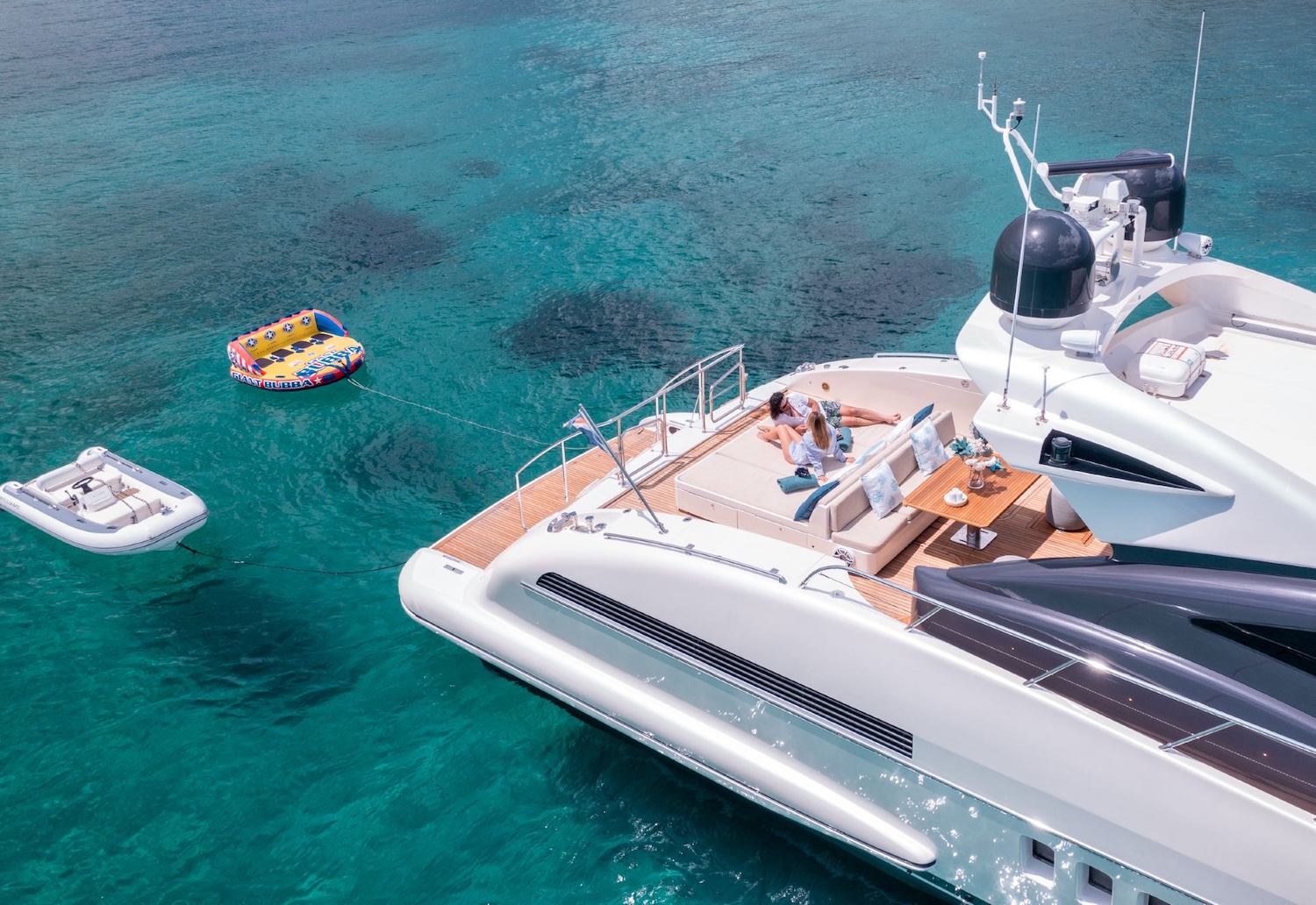
Fall in love with a hidden bay off Cap d’Antibes? Stay another day. Receive an invitation to dinner in Monaco? Depart immediately. Prefer a spontaneous overnight crossing to Corsica? The captain recalculates the route and the chef reprovisions accordingly.
This fluidity transforms travel from a sequence of appointments into a continuous state of possibility. Guests are not moving through an itinerary; the itinerary moves around them.
Weather, too, becomes an ally rather than a constraint. If winds rise in one region, the yacht simply relocates to calmer waters. Sunshine is chased, crowds avoided, and moods indulged.
Access: Beyond the Reach of the Masses
The Mediterranean’s most coveted experiences are rarely found in major ports. They exist in shallow anchorages, secluded coves, and harbours too intimate for large vessels.

An exploration-capable yacht such as HEEUS demonstrates how far beyond conventional cruising a private charter can reach. With transoceanic range, robust engineering, and the ability to operate comfortably far from infrastructure, she opens destinations that remain inaccessible to traditional cruise ships — from remote islands to pristine wilderness anchorages.

Equally, yachts like AURELIA combine performance with refined comfort, allowing guests to slip effortlessly between glamorous ports and secluded bays in the same afternoon. Arriving directly off a beach club or anchoring beneath a cliffside villa becomes part of the daily rhythm rather than a special excursion.
Large cruise ships, constrained by size and infrastructure, must dock in major commercial ports. The difference is not merely logistical; it is experiential. Charter guests encounter the Mediterranean as insiders. Cruise passengers observe it as visitors.
Onboard Living: A Private Residence at Sea
Modern superyachts are feats of design that rival — and often surpass — the world’s most prestigious residences. Interiors conceived by renowned studios feature rare materials, museum-quality art, and spatial layouts designed for both grandeur and intimacy.

Yachts such as OKKO exemplify this residential philosophy, with expansive deck areas, elegant interior salons, and multiple spaces designed for both entertaining and retreat. Meanwhile, vessels like LIQUID SKY balance social vibrancy with refined comfort, offering guests the freedom to alternate between lively gatherings and complete seclusion.

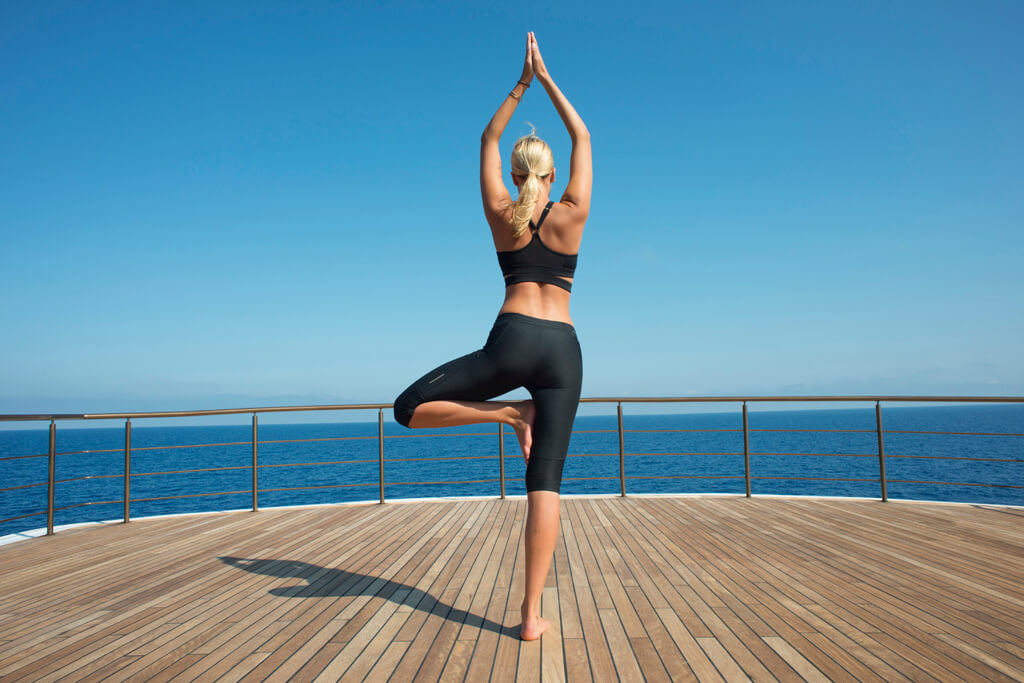
Outdoor decks function as multi-level living spaces: sunrise yoga terraces, shaded lounges, open-air cinemas, and dining areas that frame sunsets like curated artworks. Beach clubs at water level transform into private waterfront retreats, complete with bars, loungers, and direct sea access.
Cruise ships counter with scale — multiple restaurants, theatres, shopping areas, and spas. Yet these amenities are shared with hundreds or thousands of guests. The atmosphere resembles a luxury resort rather than a private sanctuary.
Design Icons and Statement Vessels
Some yachts transcend luxury to become moving works of art.

Few command attention like KHALILAH, whose striking metallic hull and futuristic silhouette make her instantly recognisable on any horizon. Chartering such a vessel is not simply about comfort; it is about presence — a floating architectural statement that announces arrival long before guests step ashore.

Others prioritise grand entertaining. Yachts such as O’LION offer generous social spaces ideal for celebrations, corporate gatherings, or multi-generational family travel, where shared experiences become the centrepiece of the voyage.
In each case, the yacht itself becomes part of the destination.
Performance and Mobility
Speed and stability dramatically expand what can be experienced during a single charter.
High-performance yachts like ROCKET ONE combine long-range capability with advanced stabilisation systems, allowing guests to cover significant distances while maintaining exceptional comfort. Breakfast in Monaco, lunch along the Italian Riviera, and sunset in Corsica become entirely feasible within a single day.

Cruise ships, by contrast, prioritise efficiency and predictability over agility. Routes are fixed, speeds moderate, and deviations rare.
For travellers who value spontaneity, mobility itself becomes a luxury.
Gastronomy: Tailored Rather Than Curated
Dining on a superyacht is not confined to menus; it is shaped by conversation.
Your chef may consult daily regarding preferences, local ingredients discovered ashore, or special occasions to celebrate. A Provençal seafood feast might be served barefoot on the aft deck one evening, followed by an elaborate tasting menu the next. Children can dine earlier with customised dishes, while adults linger over multi-course meals under the stars.

Cruise ships boast impressive culinary offerings, including specialty restaurants overseen by celebrity chefs. Yet reservations, seating times, and dress codes often apply. Even in the most exclusive venues, you remain part of a broader dining ecosystem.
On a yacht, dining feels less like a service and more like being hosted in a private home — albeit one staffed by culinary professionals.
Atmosphere: Villa Life Without Geography
Many seasoned charter guests describe the experience as akin to inhabiting a floating villa — one that relocates to the most beautiful view each morning.
There are no public announcements, no queues, no competing soundtracks from neighbouring guests. Music choices, lighting, décor, and daily rhythm are entirely self-determined. Formal evenings can be orchestrated with ease, yet equally, days may unfold in barefoot informality.
Cruise ships cultivate energy: live performances, casinos, social events, and structured entertainment. For travellers seeking stimulation and community, this vibrancy is attractive. For those pursuing restorative seclusion, it can feel relentless.
Cost: Perspective at Scale
On a per-person basis, cruises typically appear more economical. Ultra-luxury suites on top-tier lines can command five-figure weekly rates per guest, yet still undercut the headline cost of chartering an entire yacht.
However, this comparison shifts dramatically for families or groups. A yacht accommodating 8–12 guests distributes its charter fee across multiple travellers, often placing the per-person cost within the range of premium cruise suites — while delivering exponentially greater privacy and flexibility.

Moreover, the charter fee represents exclusive use of the entire vessel and crew, not merely accommodation. For clients accustomed to private aviation, the analogy is clear: chartering an aircraft is more expensive than a first-class ticket, but the experiences are not remotely comparable.
Security & Discretion: Invisible but Essential
For high-profile individuals, safety is as much about discretion as protection.
Yachts can incorporate professional security teams, controlled boarding procedures, and remote anchorages far from public scrutiny. Movements remain fluid and largely unobservable. Sensitive business discussions, family matters, or simply the desire to disconnect can be accommodated without compromise.

Public cruise environments inevitably reduce this control. While ships maintain robust safety protocols, anonymity is difficult to sustain amid thousands of fellow travellers armed with smartphones.
The Emotional Dimension of Travel
Beyond tangible features lies a subtler distinction: how each mode of travel feels.
Cruises offer reassurance through structure. Activities are planned, logistics handled, entertainment guaranteed. Guests can disengage from decision-making entirely.

A charter, by contrast, offers liberation. Days unfold organically, guided by whim rather than schedule. Time stretches, compresses, and occasionally disappears altogether. Many guests report losing track of dates entirely — a rare psychological luxury in an age of perpetual connectivity.
Which Is Truly “Better”?
The answer depends less on budget than on temperament.
A luxury cruise excels at delivering a refined, socially engaging holiday with minimal planning. It is ideal for travellers who enjoy structured exploration, diverse onboard amenities, and the opportunity to meet like-minded guests.

A private yacht charter caters to those who value sovereignty over their environment — individuals and families for whom privacy, flexibility, and personalisation are not indulgences but expectations.
For ultra-high-net-worth travellers, the decision often mirrors broader lifestyle patterns. Those who fly commercially first class may gravitate toward cruises. Those accustomed to private aviation typically find the charter model intuitively aligned with their standards.
Selecting the right yacht is as much about understanding personal preferences as it is about specifications. Experienced advisors quietly match guests with vessels and crews capable of delivering an experience that feels less like a holiday and more like a private world at sea.
The Mediterranean Without Mediation
Along the French Riviera — from Monaco’s polished glamour to the languid allure of Saint-Tropez — the superyacht remains the definitive symbol of arrival. Yet beyond symbolism, it functions as a key that unlocks experiences inaccessible by any other means.

Sunrise swims in deserted bays. Lunch anchored off a private beach club. Evening cocktails overlooking illuminated coastal villages. Spontaneous detours to Corsica or the Italian Riviera. Nights spent under a canopy of stars far from harbour lights.
These moments are not scheduled attractions; they are serendipitous privileges of mobility and privacy combined.
A Final Perspective
Ultimately, comparing a private yacht charter to a luxury cruise is akin to comparing a private residence to a grand hotel. Both can be exquisite. Both can deliver impeccable comfort. But only one offers complete autonomy.
For travellers who view luxury not as ornamentation but as freedom — freedom from crowds, schedules, and compromise — the superyacht charter stands alone.

It is not merely transportation, nor accommodation, nor entertainment. It is a self-contained world, shaped entirely by the desires of those on board, drifting through some of the most beautiful waters on earth.
And for those who have experienced it, returning to any other form of maritime travel can feel less like a step down than a return to reality.
For those considering a private yacht charter on the French Riviera or beyond, the experienced brokers at Bespoke Yacht Charter provide discreet guidance — from selecting the ideal vessel to crafting an itinerary shaped entirely around your preferences.


